
Hand-Eye Coordination Games – I still remember the afternoon my son threw his pencil across the table — not out of frustration with his homework, but because his hand simply wouldn’t do what his brain was telling it to. He could see exactly where the letter should go. His brain knew the shape. But somewhere between intention and execution, the message got scrambled.
His occupational therapist gave it a name: visual-motor integration lag. What that actually meant in daily life was fumbled buttons, missed catches, and a growing belief that he just wasn’t “coordinated.” He was seven.
What she also told us — and what I’ve since dug into obsessively — is that hand-eye coordination isn’t a fixed trait you’re either born with or not. It’s a skill. A trainable, measurable, improvable skill. And the most effective way to build it? Games. Specifically, the right kind of interactive games that demand sustained attention, rapid response, and precise timing.
This post covers what actually works — the science behind why, and the specific activities that build real, lasting coordination skills in kids and adults alike.
What Hand-Eye Coordination Actually Is (And Why It Matters More Than You Think)
Hand-eye coordination sounds simple — your eyes see something, your hands respond. But the underlying process involves a surprisingly complex relay between your visual cortex, cerebellum, and motor cortex, with your prefrontal cortex quietly supervising the whole operation.
That last part matters for parents of kids with ADHD. Research by Diamond (2000) established that the cerebellum and prefrontal cortex develop in close concert — and both regions are implicated in ADHD. This is why motor coordination difficulties and attentional challenges so often show up together. They’re not coincidental. They share neurological territory.
For children, hand-eye coordination underlies:
- Handwriting legibility and speed
- Reading fluency (eye tracking across a page)
- Sports participation and the confidence that comes with it
- Self-care skills like tying shoes, pouring drinks, using utensils
- Screen-based tasks including educational apps and typing
For adults — particularly those of us who came of age before ADHD was widely understood — poor coordination often quietly shaped our relationship with physical activities, sports, and even typing. It’s rarely identified as a root cause, which means it rarely gets addressed.
The Brain-Body Connection: Why Some Kids Struggle
If your child regularly bumps into things, drops objects, struggles to catch a ball, or finds crafts and cutting activities unusually frustrating, you’re probably not imagining it — and it’s probably not willfulness.
Piek, Pitcher, and Hay (1999) found that children with ADHD demonstrated significantly poorer motor coordination and kinaesthetic sensitivity compared to neurotypical peers, even when controlling for other variables. The kids weren’t trying to be clumsy. Their sensorimotor feedback loop was simply processing differently.
The good news buried in this research: the same neural pathways that support motor coordination — sustained attention, impulse control, response timing — are responsive to practice. Structured, engaging practice. The cerebellum is remarkably plastic, especially in childhood, and targeted activities can genuinely strengthen these connections over time.
This is also why passive activities — watching videos, listening to podcasts, even some educational apps — don’t develop coordination. The brain needs to actively predict, execute, observe feedback, and adjust. That loop is the training.
Signs Your Child May Need Coordination Support
Not every sign is obvious. Some of the more commonly missed ones:
- Avoids drawing, crafts, or writing — often labeled as “not liking” these activities when the real issue is difficulty
- Gives up quickly on new physical games — frustration tolerance drops fast when the body won’t cooperate
- Poor timing in team sports — can’t seem to connect bat to ball, catches late or not at all
- Messy or very slow handwriting with inconsistent letter sizes
- Difficulty with self-care tasks well past typical developmental age
- Over-grips objects like pencils, scissors, or game controllers
If three or more of these sound familiar, it may be worth a conversation with your child’s pediatrician about a referral to an occupational therapist. Coordination challenges are highly responsive to intervention — especially early intervention.
The Best Interactive Games for Building Hand-Eye Coordination
Here’s where I want to be specific, because “play more games” is not a strategy. The games that build coordination share a few key features: they require a precise response to a visual cue, they give immediate feedback, and they progressively increase in difficulty as the player improves. Without those three elements, you’re just passing time.
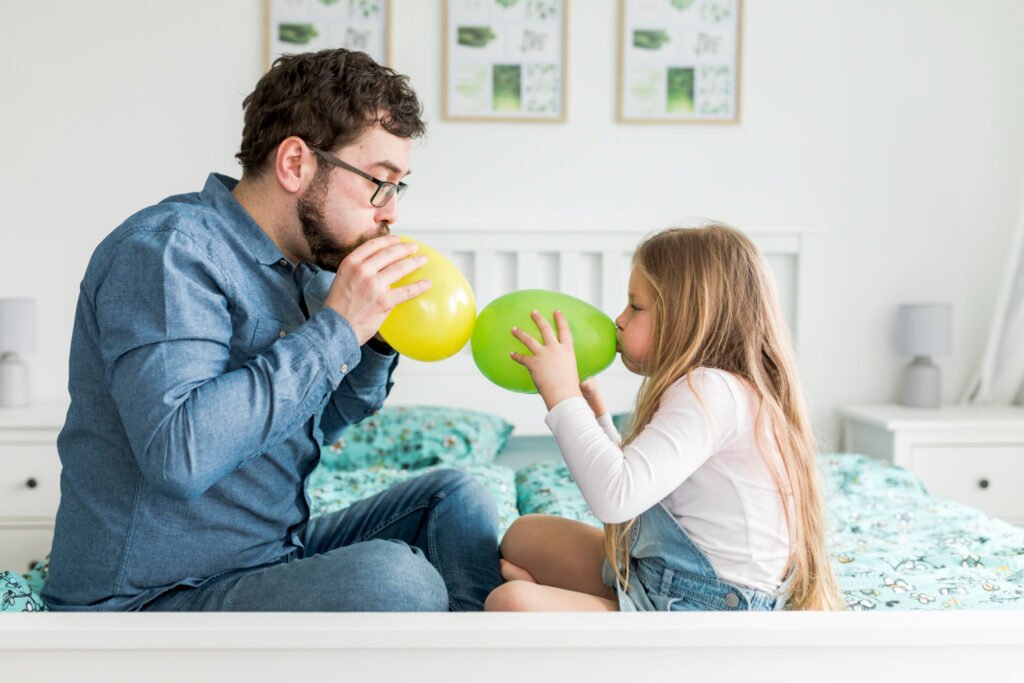
- Balloon Tennis (Ages 3–8) Replace a real ball with a balloon and use flyswatters or paper-plate paddles. The slower flight arc gives young children more processing time while still demanding tracking and timed response. Start with one balloon between two players, then progress to keeping two in the air simultaneously. The upgrade forces split attention — exactly the kind of executive function training that transfers to real-world focus.
- Cup Stacking (Ages 5–12) Sport stacking is deceptively demanding. Bilateral coordination (both hands working together at speed), visual tracking, and sequential motor planning are all engaged simultaneously. Competitive kits are inexpensive, but even basic plastic cups work fine at the beginner stages. The key is the timing component — stacking slowly doesn’t build the same neural connections as stacking with purpose.
- Reaction Ball (Ages 6+) An irregular rubber ball that bounces unpredictably. Because the player can’t anticipate where it will go, every response is genuinely reactive rather than learned. Barkley’s work (1997) on response inhibition and ADHD is relevant here — activities that punish impulsive response and reward timed, accurate response appear to engage the same inhibitory networks that ADHD interventions target. This is one of those activities.
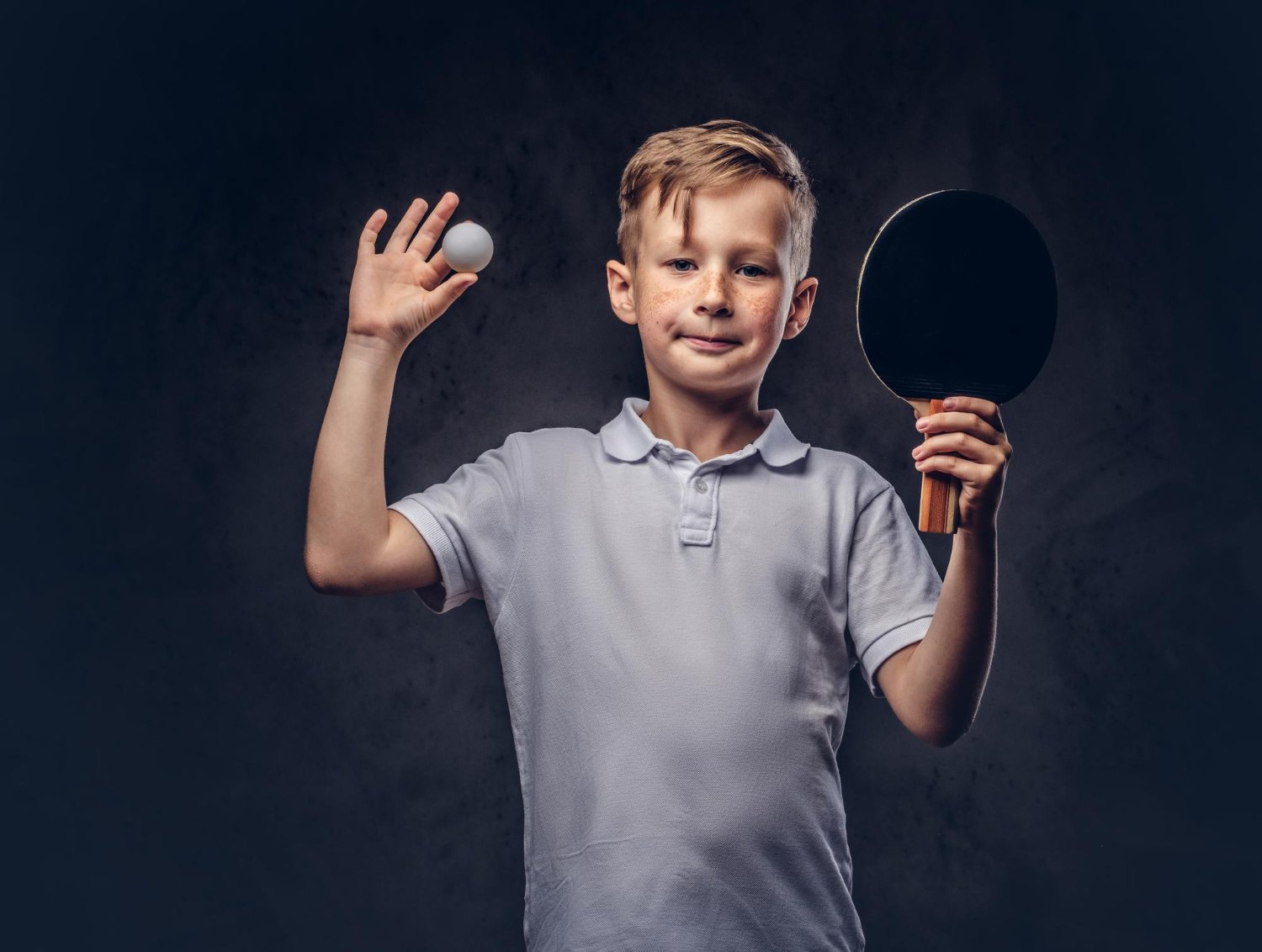
- Table Tennis (Ping Pong) — Ages 7+ Don’t underestimate this one. The combination of rapid ball tracking, paddle positioning, and anticipatory movement makes table tennis one of the highest-transfer coordination sports. You don’t need a full table — smaller practice nets can attach to any kitchen table. Even brief daily rallies (5–10 minutes) show measurable improvements in response timing within weeks.
- Digital Timing and Precision Games This category gets a bad reputation because most mobile games train impulsive tapping rather than precise response. The distinction matters enormously. In my work with families, I’ve found that activities requiring focused, timed release — where the goal isn’t to tap quickly but to tap at exactly the right moment — can help strengthen visual-motor response accuracy in ways that transfer to real-world attention tasks. The practice of watching a visual cue, holding response until the optimal moment, and releasing with precision appears to engage the same executive function networks that support impulse control and sustained attention. This is meaningfully different from games that reward random rapid tapping, and parents should look for that distinction when evaluating screen-based options.
- Jenga and Precision Block Games (Ages 5+) Often overlooked as a coordination tool because it doesn’t feel athletic. But Jenga requires precise force calibration, steady hand movement, and sustained visual attention — and it naturally punishes impulsive action. For children who resist “exercise-style” coordination work, Jenga-type games are a low-pressure entry point that genuinely develops fine motor skill.
- Laser Tag and Nerf Target Practice (Ages 6+) Setting up stationary targets and having children aim, fire, and adjust is a legitimate coordination drill dressed up as play. What makes it effective: the feedback loop is instant and unambiguous. The target is either hit or it isn’t. Progressive challenge (smaller targets, greater distance, moving targets) can be introduced naturally.
How Long Does It Take to See Results?
Green and Bavelier’s (2012) review of action-based visual training found measurable improvements in attentional control and visual-motor processing after relatively short training periods — sometimes as few as 10 hours of structured practice spread across several weeks.
For children with ADHD or developmental coordination disorder, results tend to emerge more gradually but are no less real. Zwicker and Harris (2009) found that task-specific motor practice produced significant skill improvements in children with coordination difficulties — but the key word was specific. Practice had to be directed at the actual skill being developed, with increasing challenge and clear feedback.
What this means practically: 10–15 minutes daily, consistently applied, with activities that include feedback and progression, is far more effective than 90-minute sessions twice a month. Consistency matters more than intensity. Build the habit before you build the duration.
Frequently Asked Questions
What are the best hand-eye coordination games for kids with ADHD?
Activities that reward precise timing over speed tend to work best for ADHD brains — because they actively punish the impulsive response rather than rewarding it. Table tennis, reaction balls, cup stacking, and timing-based digital games are strong options. The key is that the game must require a controlled, accurate response — not just a fast one.
At what age should I start hand-eye coordination activities?
Foundational coordination play can start as young as 18 months with simple rolling and catching. Structured games with feedback and progression become effective around age 4–5. The earlier you start, the more neural plasticity you’re working with — but meaningful improvement is possible at any age, including adulthood.
Can hand-eye coordination games really help with focus and attention?
The research suggests yes — with caveats. Activities that require sustained visual attention plus a timed motor response appear to engage prefrontal and cerebellar networks linked to attention regulation. This isn’t the same as a clinical ADHD intervention, but as a complementary daily practice, targeted coordination activities have a real and growing evidence base.
How long should my child practice coordination games each day?
Research suggests 10–15 minutes of focused, progressive practice daily is more effective than longer, infrequent sessions. Keep sessions short enough that they end before frustration peaks — the goal is consistent positive engagement over time, not exhausting effort.
Are video games good or bad for hand-eye coordination?
It depends entirely on the game mechanic. Action games that require precise, timed responses and penalize impulsive inputs can genuinely improve visual-motor coordination and attentional control. Games that simply reward rapid tapping or passive watching do not. The distinction isn’t screen time vs. no screen time — it’s the type of cognitive demand the game makes.
My child hates "practice" — how do I make coordination training feel like play?
Disguise the structure. Balloon tennis doesn’t feel like therapy. Jenga doesn’t feel like a motor skills exercise. Table tennis feels like hanging out. The neurological training happens regardless of whether the child knows they’re training — what matters is the quality of the demand the activity places on their visual-motor system.
References
Source | Link | Key Finding |
Diamond, A. (2000). Close interrelation of motor development and cognitive development and of the cerebellum and prefrontal cortex. Child Development, 71(1), 44–56. | Establishes the developmental link between cerebellar motor function and prefrontal executive function, directly relevant to why motor coordination and attention co-occur in ADHD. | |
Piek, J.P., Pitcher, T.M., & Hay, D.A. (1999). Motor coordination and kinaesthesis in boys with attention deficit–hyperactivity disorder. Developmental Medicine & Child Neurology, 41(3), 159–165. | Documents significantly poorer motor coordination and kinaesthetic sensitivity in boys with ADHD, supporting the link between attentional and motor processing differences. | |
Barkley, R.A. (1997). Behavioral inhibition, sustained attention, and executive functions: Constructing a unifying theory of ADHD. Psychological Bulletin, 121(1), 65–94. | Foundational theory explaining ADHD as a deficit in behavioral inhibition — directly supports why activities that punish impulsive response and reward timed accuracy are therapeutically relevant. | |
Green, C.S., & Bavelier, D. (2012). Learning, attentional control, and action video games. Current Biology, 22(6), R197–R206. | Demonstrates that action-based visual tasks improve attentional control and visual-motor processing, with measurable effects emerging in relatively short training windows. | |
Zwicker, J.G., & Harris, S.R. (2009). A reflection on motor learning theory in pediatric occupational therapy practice. Canadian Journal of Occupational Therapy, 76(1), 29–37. | Establishes that task-specific, progressive motor practice produces significant skill improvement in children with coordination difficulties — key basis for structured game-based training recommendations. | |
Houwen, S., Hartman, E., & Visscher, C. (2009). Physical activity and motor skills in children with and without visual impairments. Medicine & Science in Sports & Exercise, 41(1), 103–109. | Confirms the bidirectional relationship between physical activity engagement and motor skill development, supporting the value of regular, short-duration coordination practice. |