


Executive Dysfunction ADHD might sound real complex when you first hear about it, however, it is a rather simple dysfunction that we help you navigate in this resource.
If you’ve ever sat down to tackle a simple task—like replying to an important email, starting homework, or even folding a pile of laundry-only to feel completely frozen, you’re far from alone.
For millions of people living with ADHD, this “stuck” feeling isn’t about laziness, poor motivation, or lack of intelligence.
It’s a very real neurological challenge known as executive dysfunction.
Executive dysfunction refers to difficulties with the brain’s higher-level “management system”-the mental skills that help us plan, initiate, organize, sustain effort, and complete tasks.
In ADHD, these skills often don’t operate as smoothly due to differences in brain development and chemistry, particularly in the prefrontal cortex and dopamine-related pathways.
This isn’t a character flaw. Many highly intelligent and capable individuals with ADHD describe it as an invisible wall between intention and action.
Understanding executive dysfunction as a brain-based pattern-rather than a personal failing-can reduce shame and open the door to kinder, more effective strategies.
What Is Executive Dysfunction ADHD?
Executive functions are often compared to the CEO or air traffic controller of the brain. They include several core skills:
- Task initiation: Getting started, especially on non-rewarding or overwhelming activities
- Planning and prioritization: Breaking big goals into manageable steps
- Working memory: Holding information in mind while doing something else
- Sustained attention: Staying focused long enough to finish
- Impulse control and emotional regulation: Managing frustration or shifting gears
- Task switching and completion: Moving between activities and seeing things through
Research shows that executive dysfunction is extremely common in ADHD.
Studies indicate that a significant majority of children with ADHD demonstrate impairment in at least one executive function domain, and these challenges frequently persist into adulthood.
Unlike a separate diagnosis, executive dysfunction in ADHD stems from measurable differences in brain structure and function.
The prefrontal cortex—which plays a central role in executive control—often shows altered activation, connectivity, and maturation in people with ADHD.
Dopamine and norepinephrine signaling, which influence motivation, reward processing, and cognitive control, can also be less efficient in key regions.
Some experts describe a roughly 30% developmental delay in executive function skills for many with ADHD compared to neurotypical peers of the same age.
This helps explain why tasks that seem straightforward to others can feel disproportionately difficult.
The Brain Science Behind the Struggle (ADHD Task Paralysis)
ADHD is frequently linked to the executive dysfunction theory, which suggests that many core symptoms arise from reduced executive control tied to frontostriatal and frontoparietal network differences.
Dopamine dysregulation plays a key role: lower efficiency in reward pathways can make boring or delayed-reward tasks feel unrewarding, reducing the natural “get started” signal.
This creates a genuine neurological barrier to task initiation and completion:
- The brain struggles to transition from thinking about a task to actually beginning it.
- Overwhelm arises when tasks aren’t broken down clearly.
- Working memory overload leads to losing track of steps midway.
- Emotional frustration quickly derails momentum.
The cycle of procrastination, guilt, and self-criticism that follows can worsen the problem, feeding into anxiety or lowered self-esteem.
Importantly, these patterns appear across the lifespan but manifest differently by age and context.
How Executive Dysfunction Shows Up in Daily Life
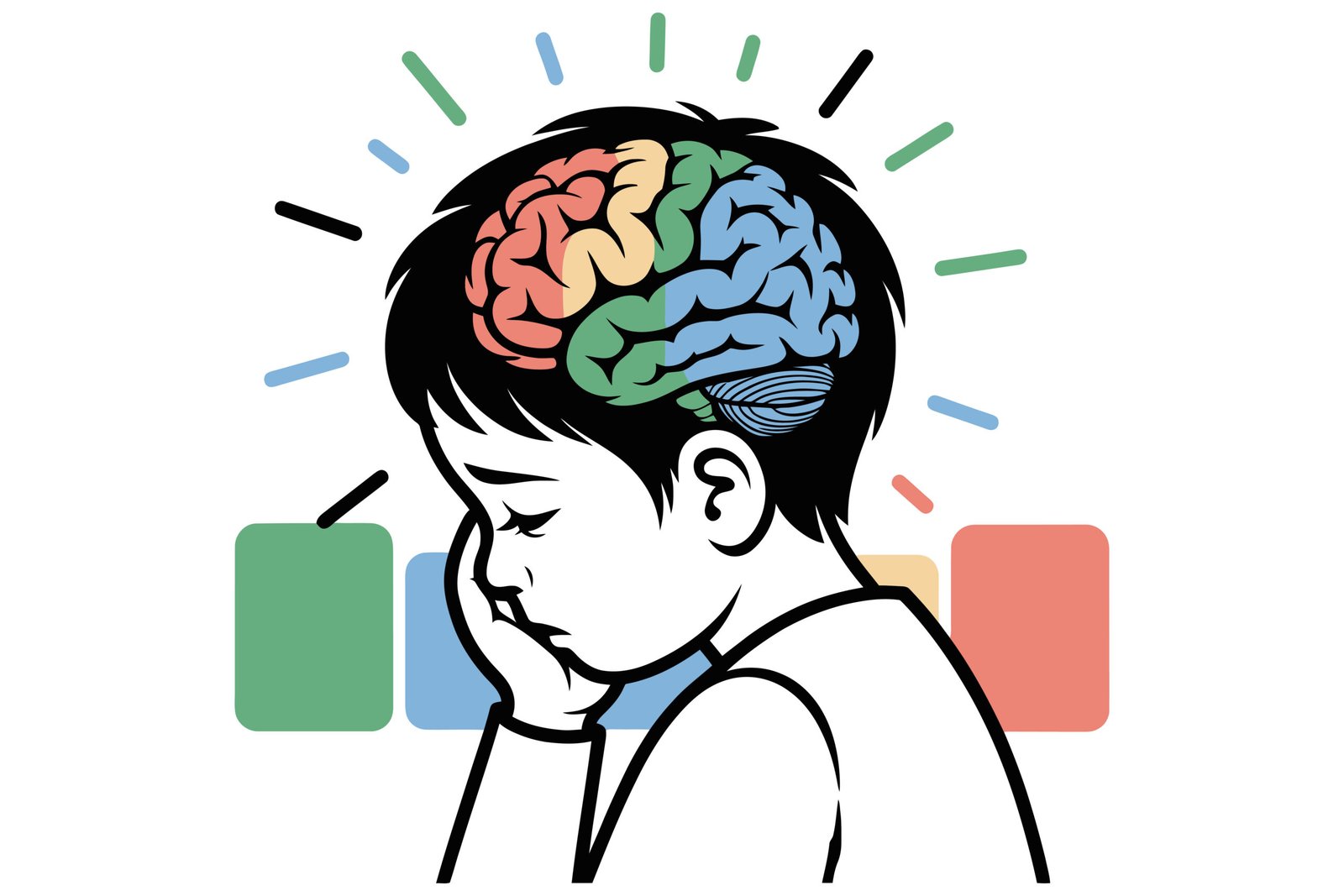
In Children and Teens
Kids with ADHD often face executive challenges in structured environments like school or home routines. Common signs include:
- Difficulty starting homework after school, even when they know it’s due soon
- Trouble following multi-step instructions in class, sports, or chores
- Messy backpacks or bedrooms despite repeated reminders
- Emotional meltdowns when plans change or tasks feel overwhelming
- Starting projects with enthusiasm but abandoning them halfway
These struggles can affect academic performance, peer relationships, and self-confidence during critical developmental years.
In Adults
As demands shift toward greater independence, executive dysfunction often becomes more visible in complex, self-directed responsibilities:
- Chronic procrastination on work projects, bills, or emails (“doom piles” of paperwork or laundry)
- Feeling mentally exhausted from the constant internal effort needed to “push through”
- Time management issues leading to missed deadlines or rushed last-minute work
- Difficulty with long-term planning, such as career goals or household organization
- Inner restlessness or decision fatigue in professional and personal life
Adults may also notice persistent challenges even if hyperactivity symptoms have lessened—shifting instead to internal restlessness or emotional dysregulation.
Many adults with ADHD remain undiagnosed, especially if they’ve developed strong compensatory strategies or hold high-achieving roles.
Yet executive function deficits can still create significant hidden strain in relationships, career progression, and daily well-being.
Common Myths and the Emotional Toll

A widespread myth is that executive dysfunction equals laziness or lack of willpower. In reality, people with ADHD often desperately want to complete tasks—they simply face higher “activation energy” barriers due to brain wiring.
The emotional impact is profound. Repeated struggles can lead to shame, anxiety, depression, or rejection sensitive dysphoria.
Over time, this can erode self-trust and make future attempts feel even harder. Reframing the experience as “my brain needs extra scaffolding” rather than “I’m failing” is a powerful first step toward self-compassion.
Practical, Brain-Friendly Strategies That Help
No single solution fits everyone, but combining environmental supports, habit tweaks, and engaging activities can significantly lower friction.
Here are evidence-informed approaches that many find helpful:
1. Lower the Activation Energy
– Apply the 2-minute rule: If a task takes two minutes or less, do it immediately (or commit to just the tiniest first step, like opening the document).
– Try body doubling: Work alongside someone (in person or virtually via video call). The presence of another person can provide gentle external structure, accountability, and co-regulation.
– Pair tasks with mild stimulation (music, a podcast, or a favorite drink) to boost dopamine naturally.
2. Externalize Your Brain
– Use visual tools: Checklists, sticky notes, color-coded planners, or apps with visual progress bars.
– Set gentle timers: Short focused bursts (modified Pomodoro—e.g., 15–25 minutes) create manageable urgency without overwhelm.
– Design your environment: Reduce decision fatigue by prepping spaces the night before.
3. Build Predictable Routines and Habit Stacking
– Create low-decision “anchor” routines for mornings and evenings.
– Stack new micro-habits onto existing ones (e.g., after brushing teeth, spend two minutes on one quick task). Consistency reduces the mental load of deciding “what next.”
4. Incorporate Movement and Playful Skill-Building
Physical activity and coordinated play can support broader cognitive processes. Motor skills, including hand-eye coordination and timing, share overlapping brain networks with executive functions like planning, attention, and impulse control.
Engaging in fun, repetitive activities that involve quick responses and visual-motor practice offers a low-pressure, enjoyable way to strengthen these pathways. Many people find that playful reflex and coordination games provide an engaging method to practice timing, focus, and response control—skills that complement other executive function supports.
5. Practice Self-Compassion and Seek Tailored Support
– Reframe setbacks: “My brain needs extra scaffolding today” instead of harsh self-judgment.
– Consider ADHD-specific cognitive behavioral therapy (CBT), coaching, or organizational skills training.
– Prioritize foundational lifestyle factors: consistent sleep, balanced nutrition, and regular movement, which all support dopamine regulation and prefrontal function.
Progress usually comes from reducing demands on executive functions rather than forcing more willpower.
Frequently Asked Questions
Is executive dysfunction the same as ADHD?
No. Executive dysfunction describes specific skill challenges, while ADHD is a broader neurodevelopmental condition that commonly includes them.
Can executive dysfunction improve over time?
Many people see gradual improvements with age, strategies, and support, though some challenges may persist. Early intervention and consistent tools often lead to better outcomes.
Do medications help?
Stimulant and non-stimulant medications can improve dopamine signaling and executive function for many, but they work best alongside behavioral strategies and lifestyle supports. Always consult a healthcare provider.
Moving Forward with Compassion and Practical Tools
Executive dysfunction is a legitimate, brain-based aspect of ADHD that affects task initiation and completion for many children, teens, and adults. With greater awareness, self-compassion, and brain-friendly strategies, daily life can become noticeably more manageable and less exhausting.
Small, consistent experiments—tailored to your unique needs—often yield the best long-term results. Professional guidance from ADHD-informed therapists or coaches can provide personalized scaffolding when needed.
If you’re supporting a child or navigating these challenges yourself, remember: you’re not alone, and effective approaches exist that work *with* an ADHD brain rather than against it.
What strategies have helped you most with task initiation or follow-through? Share your experiences in the comments—your insights could help others feel seen and supported.
This article is for educational and informational purposes only. It is not a substitute for professional medical, psychological, or diagnostic advice. Please consult qualified healthcare providers for personalized guidance on ADHD assessment and management.
References
- MacDonald, H.J. et al. (2024). The dopamine hypothesis for ADHD. PMC.
- ADDitude Magazine. Executive Dysfunction: Signs and Symptoms of EFD.
- ADDitude Magazine. Executive Dysfunction & Learning Disabilities in Kids with ADHD.
- CHADD. Executive Function Issues and ADHD.
- Shimko, G.A. et al. (2025). The Relationship Between Motor Development and ADHD. PMC.
- Cleveland Clinic. How Body Doubling Helps With ADHD.
- ADD.org. The ADHD Body Double.
YOU MAY ALSO LIKE –