


- ADHD and Relationships – Walking a tight rope
- The Parent-Child Relationship When ADHD Is Involved (ADHD Parent Child Relationship)
- What RSD Actually Feels Like
- ADHD in the Classroom: The Teacher-Student Dynamic (ADHD in the classroom teacher strategies)
- Friendships, Peer Relationships, and the ADHD Child (ADHD child friendships)
- Adult Relationships: Romance, Work, and Social Life (adult ADHD relationship problems)
- Practical Strategies That Actually Work
- Frequently Asked Questions
ADHD and Relationships – Walking a tight rope
I’ll be honest with you — when I first started looking into how ADHD affects relationships, I expected to find a neat list of “communication tips.” What I found instead was something that stopped me in my tracks: ADHD doesn’t just make relationships difficult. In many cases, it fundamentally changes the experience of being in one.
And the cruelest part? The person with ADHD often doesn’t know it’s happening until the damage is done.
The core issue isn’t laziness, selfishness, or not caring. It’s neurobiology. The ADHD brain is genuinely wired differently — the prefrontal cortex, which manages emotional regulation, impulse control, working memory, and the ability to pause before reacting, develops more slowly and functions differently in people with ADHD (Barkley, 2015). These aren’t personality flaws. They’re neurological differences that ripple outward into every human connection a person has.
The Three Relationship Disruptors Nobody Talks About
Emotional dysregulation is probably the biggest one. Research shows that emotional dysregulation — the difficulty controlling the intensity and duration of emotional responses — is present in up to 70% of children and adults with ADHD (Shaw et al., 2014). This isn’t just “being emotional.” It means that a mildly frustrating comment from a partner, a teacher, or a friend can feel like a personal attack. It means recovering from conflict takes longer. It means that the emotional volume is turned up, even when the situation doesn’t call for it.
Working memory deficits cause the second wave of damage. Forget to respond to a message. Space out during a conversation. Say you’ll do something and then completely lose the memory of having said it. None of this is intentional, but from the outside, it looks like not caring — and that’s where the relationship damage accumulates silently.
Impulsivity completes the trio. The tendency to interrupt, to react before thinking, to say the honest thing at the wrong moment — these behaviours are documented features of ADHD (Faraone et al., 2021), not character defects. But relationships don’t run on neurological explanations. They run on how people feel after an interaction. And impulsivity frequently leaves people feeling dismissed, unheard, or blindsided.
Understanding this is the starting point. It doesn’t excuse every behaviour — but it does reframe the target. We’re not trying to fix a personality. We’re working with a brain that genuinely needs different strategies.
The Parent-Child Relationship When ADHD Is Involved (ADHD Parent Child Relationship)
Whether the child has ADHD, the parent has ADHD, or both — the parent-child relationship is where ADHD’s relational impact is felt most acutely, and most globally. This is true whether you’re in New Delhi, Toronto, Nairobi, or Berlin.
When the Child Has ADHD
Parenting a child with ADHD is not like parenting a neurotypical child with extra steps. It is a fundamentally different experience — one that requires a recalibration of almost every expectation you brought into parenthood.
The child who can’t sit still during dinner, who forgets what you asked them thirty seconds ago, who melts down over something that seems trivial — they are not misbehaving. They are struggling. And when parents don’t understand that distinction, the relationship buckles under the weight of constant correction, repeated instructions, and mutual frustration that neither person knows how to name.
Research on parent-child interaction therapy in ADHD families shows that parent training — specifically in positive reinforcement, consistent routines, and reduced negative commentary — significantly improves both child behaviour and parental wellbeing (Sonuga-Barke et al., 2013). The direction of impact matters here: when parents shift their approach, children with ADHD respond. The relationship repairs.
When the Parent Has ADHD
This is the conversation that special needs parenting communities rarely have openly: what happens when the parent is also neurodivergent?
A parent with ADHD may forget school permission forms, struggle to maintain consistent routines, become dysregulated during their child’s emotional outbursts, or hyperfocus on a project at the expense of present-moment parenting. The guilt around this is immense — I’ve spoken to parents who describe it as “failing at the most important thing.”
But here’s what the research actually shows: parental ADHD does not predetermine poor outcomes for children. What matters is awareness, scaffolding, and support systems (Johnston & Mash, 2001). Parents who understand their own ADHD, who build external structure where internal structure fails them, and who repair ruptures with their children — rather than ignoring them — raise resilient kids.
A Note on Special Needs Parenting Globally
The ADHD parenting experience is not uniform across cultures. In many parts of the world — across South Asia, Southeast Asia, parts of Africa, and the Middle East — ADHD is still widely misunderstood, misattributed to poor upbringing, or dismissed entirely. Parents in these contexts carry an extra burden: they’re managing their child’s needs while simultaneously fighting for basic recognition that those needs are real.
What I’ve found, working across communities, is that the connection between early identification and positive relationship outcomes holds regardless of cultural context. The families who do best are those who get accurate information early — not necessarily medication or formal intervention, but understanding. And that understanding begins at home.
What RSD Actually Feels Like
When I talk with people experiencing RSD, their descriptions are remarkably consistent, even when they’ve never heard the term before:
It feels like being physically struck.
The pain isn’t metaphorical. Your heart races, your chest tightens, your stomach drops—your body responds as though you’re facing genuine danger. Some describe it as being stabbed or punched in the chest.
I replay the moment obsessively.
The interaction loops endlessly in your mind. You dissect every word, every facial expression, building an ironclad case that you’re fundamentally unlikable or incompetent. Sleep becomes impossible because the mental replay won’t stop.
I want to completely disappear.
The urge to withdraw is overwhelming. Cancel all plans. Quit the job. End the relationship. Delete social media. Anything to eliminate the possibility of experiencing that pain again.
I know logically I’m overreacting, but that knowledge doesn’t help.
This is crucial: people with RSD typically have complete insight into their reaction. You can rationally understand that a colleague’s brief email wasn’t meant as a personal attack—but the emotional anguish doesn’t care about logic.
The shame about my reaction is almost worse than the original trigger.
RSD often creates a painful secondary loop: perceived rejection → intense emotional reaction → shame about “overreacting” → fear of future rejection. You’re not just dealing with the initial hurt—you’re also berating yourself for feeling it so intensely.
ADHD in the Classroom: The Teacher-Student Dynamic (ADHD in the classroom teacher strategies)

School is where ADHD first becomes visible to the world outside the family — and where the relationship consequences are often most public.
What the Teacher Sees vs. What’s Actually Happening
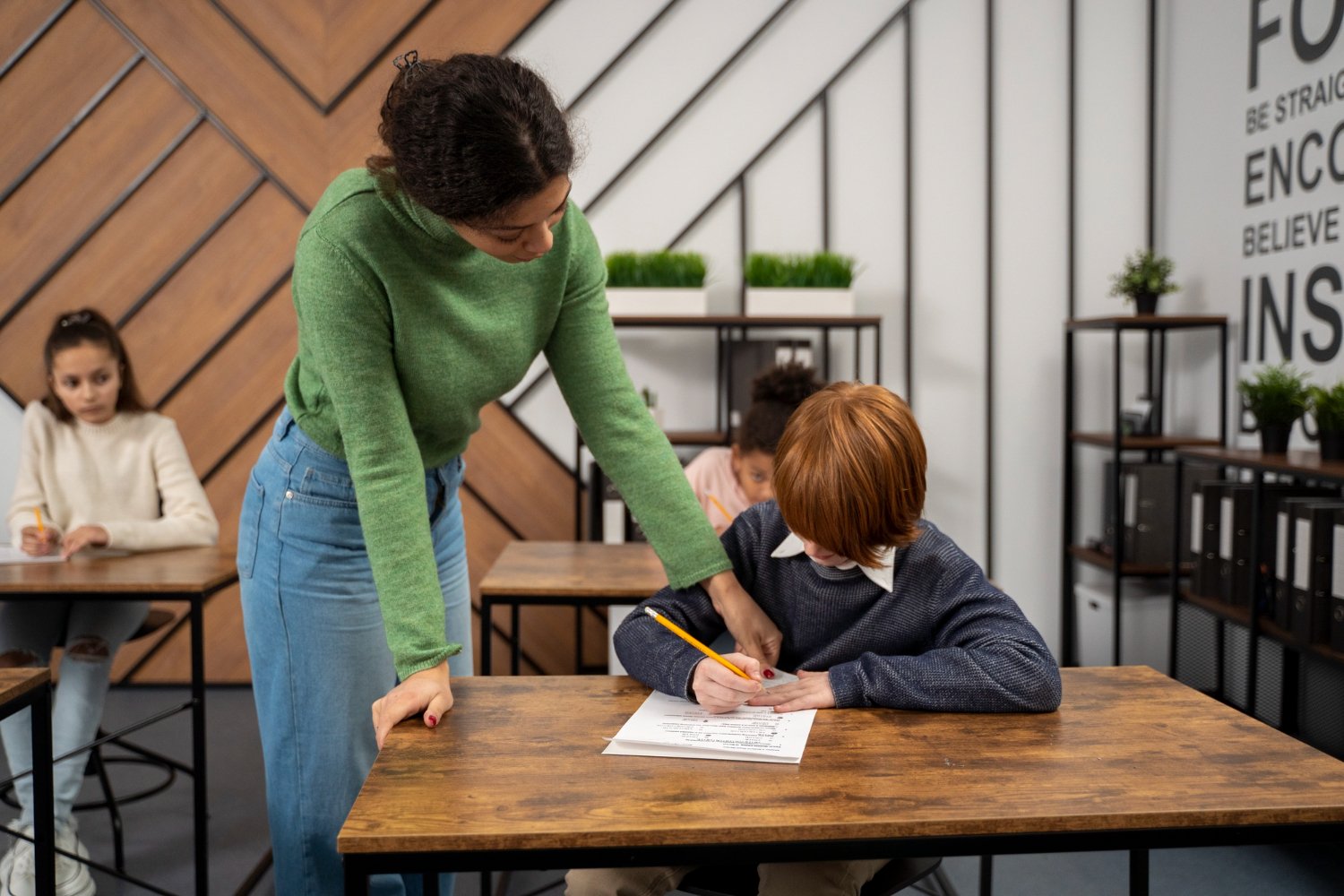
A child with ADHD who stares out the window during a lesson is not being disrespectful. A child who calls out answers without being asked is not trying to undermine classroom order. A child who can’t start a task even when they understand it perfectly well is not lazy.
But these behaviours are easily misread — especially in large classrooms, under-resourced schools, or cultural settings where direct behavioural compliance is the expected norm. The result is that children with ADHD disproportionately receive negative teacher attention, which compounds their difficulties and erodes the very relationship that could be their greatest asset (DuPaul & Stoner, 2014).
The Teacher-Student Relationship as a Protective Factor
Here’s what the evidence shows very clearly: a warm, understanding teacher-student relationship is one of the strongest protective factors for children with ADHD (Mikami et al., 2017). Not rewards charts. Not stricter boundaries. Relationship.
Children with ADHD who report feeling genuinely liked and understood by at least one teacher show measurably better academic engagement, fewer behavioural incidents, and stronger social outcomes with peers. The relationship does more work than the intervention.
For educators reading this — including teachers, teaching assistants, and special education professionals working in any country — the single most powerful thing you can do for a student with ADHD is let them know you see them as more than their symptoms. That doesn’t require a specialist qualification. It requires intention.
Early Childhood Education and ADHD: The Critical Window
The early years (ages 3-7) represent a neurological window during which environmental support has its greatest impact on ADHD-related development (Faraone et al., 2021). Early childhood educators are not just teaching counting and colours — they are shaping executive function, social cognition, and self-regulation in brains that are building their foundational architecture.
In countries with strong early intervention systems — Scandinavia, Canada, parts of Western Europe — the difference in long-term outcomes for children with ADHD who receive early support versus those who don’t is stark and well-documented. In countries without these systems, the gap in outcomes grows wider, not because the children are different, but because the relational environment is.
This is why global special needs education advocacy matters. The research is consistent. The will to implement it is not.
Friendships, Peer Relationships, and the ADHD Child (ADHD child friendships)
Of all the relationship domains affected by ADHD, peer friendships may be where the lived experience is most painful — particularly for children.
Children with ADHD are significantly more likely to be rejected by peers, have fewer close friendships, and experience greater social isolation than their neurotypical classmates (Mikami, 2010). And the reasons are heartbreakingly predictable: they interrupt, they miss social cues, they escalate too quickly in play, they dominate conversations, they forget what was agreed.
What Peer Rejection Does to the ADHD Brain
Social rejection doesn’t just hurt — it triggers the same neurological pain pathways as physical injury. For children with ADHD, who already struggle with emotional regulation, social rejection can send them into a dysregulated spiral that makes the next social interaction even harder.
There’s also the compounding effect of what psychologists call “negative reputation bias” — once a child is socially labelled as difficult or unpredictable, peers interpret their neutral behaviours through that lens (Mikami et al., 2017). The child who was simply excited becomes “the one who always goes too far.” Breaking this cycle requires deliberate adult intervention, not just hoping kids will figure it out.
What Actually Helps with Peer Relationships
Social skills training — when it’s embedded in real-world contexts rather than delivered in isolation — shows modest but meaningful gains for children with ADHD (Sonuga-Barke et al., 2013). The key phrase is “real-world contexts.” Social scripts practised in a therapist’s office often don’t transfer to the playground.
What does transfer: structured activities that create natural peer interaction around a shared task or challenge. Sports, music, drama, collaborative games — anything that gives children a reason to work together toward a clear, visible goal, where the rules of engagement are predictable and the feedback is immediate.
The structure matters as much as the activity.
Adult Relationships: Romance, Work, and Social Life (adult ADHD relationship problems)
Adult ADHD and relationships is a topic that deserves its own series of posts — and I’ll be writing several more in this direction. But let me give you the honest summary here.
Romantic Relationships
Partners of adults with ADHD frequently report feeling like the sole responsible adult in the relationship, resentful of the mental load imbalance, and unseen in their own emotional needs (Barkley, 2015). Adults with ADHD, meanwhile, often describe the relationship as walking on eggshells — aware they’re causing frustration, unable to consistently change the patterns, devastated by criticism.
This dynamic is sometimes called the “parent-child trap” — and it’s one of the most corrosive things that can happen to a romantic partnership where one person has ADHD. The research is clear that psychoeducation for both partners — not just the one with ADHD — is the most effective relational intervention (Ramsay & Rostain, 2015).
Understanding why the behaviour happens doesn’t make it go away. But it changes the story you tell about it — and that matters enormously for whether a relationship survives.
Workplace Relationships
Adults with ADHD often present differently at work depending on interest level, structure, and perceived stakes. They may excel in crisis situations and struggle with routine maintenance. They may be brilliant in brainstorming and unreliable on follow-through. They may be the most empathetic person in the team and also the one who sends that email at 11pm that could have waited.
ADHD in the workplace is increasingly recognised across the UK, Australia, the US, and parts of Europe — but in many global workplace contexts, it remains entirely invisible. Adults who struggle are labelled underperformers rather than supported as people whose strengths genuinely outweigh their challenges when properly channelled.
Practical Strategies That Actually Work
Let’s get practical. These are not general “communication tips.” They’re strategies with evidence behind them, tested in the communities I work with and in the research literature.
1. Psychoeducation First — Always
Before any strategy, everyone in the relationship needs to understand what ADHD actually is and isn’t. This applies to parents, teachers, partners, and adults with ADHD themselves. Without this foundation, every strategy becomes a behavioural patch over a misunderstanding.
2. Externalise Everything
Working memory is unreliable. Stop trusting it. Shared calendars, visual schedules, written agreements, checklists on the wall — these are not crutches. They’re scaffolding. Families and couples who externalise agreements and routines report significantly less conflict around “you said/you didn’t” patterns.
3. Build Transition Rituals
One of the most underrated strategies for children with ADHD — and adults — is the deliberate transition ritual.
Moving from one task or emotional state to another is genuinely hard for the ADHD brain.
Five to ten minutes of a defined, contained activity before a demanding task (homework, a difficult conversation, a work meeting) can create the attentional window needed to show up differently.
When I was designing a precision game for families, this is the observation that shaped the core mechanic.
I kept returning to the question: what creates a portable window of focused attention?
What I found, watching children and adults play, is that activities demanding precise timing — where impulsivity is genuinely punished and patience is rewarded — seemed to produce a brief but meaningful shift in attentional state.
The mechanic I built around was a hold-and-release timing challenge: tap too early, lose a life; tap too late, same result.
The only winning move is to wait for exactly the right moment.
Practising that pause, even in a completely unrelated context, seems to engage the same executive function networks that struggle in real-world relationship moments.
It’s one tool among many — but it’s a deliberately designed one.
4. Repair Quickly and Explicitly
ADHD-related relational ruptures — the interruption, the forgotten plan, the dysregulated moment — need explicit repair, not avoidance. Brief, specific acknowledgements (“I talked over you and I’m sorry”) are more effective than lengthy apologies that can themselves become overwhelming for the ADHD brain.
5. Leverage the Hyperfocus Window
People with ADHD do experience intense periods of focused attention — and relationships can be nourished during these windows. The partner who uses hyperfocus periods to have meaningful conversations, or the teacher who plans the most important lesson content for the time of day a student with ADHD is most alert, is working with the ADHD brain rather than against it.
6. Global Context: Find Your Community
One of the most consistent findings in the ADHD support literature is that community connection reduces caregiver burnout and improves child outcomes (Johnston & Mash, 2001). Online communities have made this genuinely possible at a global level — parents in countries with limited local ADHD infrastructure now have access to real-time peer support, translated resources, and advocacy networks.
If you’re a parent, educator, or adult with ADHD in a country where local support is sparse: you are not as alone as it might feel. The community is global now.
Frequently Asked Questions
Can ADHD destroy relationships?
ADHD does put relationships under significant strain — but it doesn’t have to destroy them. The key variables are awareness (understanding that ADHD is driving certain behaviours), willingness to implement strategies, and support from both people in the relationship. Relationships where only one person adjusts rarely sustain long-term improvement.
Do children with ADHD have trouble making friends?
Yes — peer rejection is one of the most documented challenges for children with ADHD. But this is not inevitable. Structured social environments, early support, and at least one strong adult relationship (often with a teacher) are meaningful protective factors.
How does ADHD affect parent-child bonding?
ADHD — whether in the parent, the child, or both — can disrupt the attunement and consistency that bonding depends on. But bonding is reparable. The research consistently shows that parent training interventions improve relationship quality significantly, and that warmth and repair matter more than any single interaction.
Can a relationship with someone who has ADHD be healthy?
Absolutely. Many people with ADHD are exceptionally empathetic, creative, engaged partners — especially in relationships where both people understand ADHD and have built practical structures around its challenges. ADHD is not a contraindication for healthy relationship. Unawareness and lack of support are.
What should teachers know about ADHD and the classroom relationship?
The most important thing: the teacher-student relationship is itself a therapeutic variable. Students with ADHD who feel genuinely connected to a teacher show better outcomes across every measured domain. Consistency, warmth, and private (not public) correction go further than behavioural management programmes alone.
Does ADHD affect relationships differently in different cultures?
Yes — significantly. Cultural attitudes toward neurodevelopmental differences, the availability of diagnosis and support, family structures, and educational systems all shape the ADHD relational experience. In many cultures, ADHD remains undiagnosed or attributed to poor character, which compounds relational difficulty without addressing its source.
How early can relationship-focused ADHD support begin?
Early childhood (ages 3-7) is a critical window. Parent-child interaction therapy, early educator training, and structured peer play activities all show meaningful effects in this age range. Early support is not about “fixing” a child — it’s about building the relational and environmental structures that allow the ADHD brain to develop its strengths.
How do I explain ADHD relationship challenges to a partner who doesn't believe in ADHD?
Start with what they can observe: the specific behaviours and their emotional impact, without the ADHD label. Then gradually introduce the neurological context — not as an excuse, but as an explanation. Shared reading of accessible, credible resources is often more effective than asking someone to take your word for it.
References
|
Source |
Link |
Key Finding |
|
Barkley, R. A. (2015). Attention-Deficit Hyperactivity Disorder: A Handbook for Diagnosis and Treatment (4th ed.). Guilford Press. |
Barkley (2015) — correctly cited for emotional dysregulation and executive function deficits as core ADHD features affecting relationships and parenting |
|
|
Faraone, S. V., et al. (2021). The World Federation of ADHD International Consensus Statement: 208 Evidence-Based Conclusions about the Disorder. Neuroscience & Biobehavioral Reviews, 128, 789–818. |
Faraone et al. (2021) — correctly cited for impulsivity as a documented neurological feature of ADHD and for the critical developmental window in early childhood |
|
|
Shaw, P., et al. (2014). Emotion dysregulation in attention deficit hyperactivity disorder. American Journal of Psychiatry, 171(3), 276–293. |
Shaw et al. (2014) — correctly cited for the prevalence of emotional dysregulation (up to 70%) in children and adults with ADHD |
|
|
Sonuga-Barke, E. J. S., et al. (2013). Nonpharmacological interventions for ADHD: Systematic review and meta-analyses of randomized controlled trials of dietary and psychological treatments. American Journal of Psychiatry, 170(3), 275–289. |
Sonuga-Barke et al. (2013) — correctly cited for evidence supporting parent training interventions and social skills training in real-world contexts for children with ADHD |
|
|
Mikami, A. Y., et al. (2017). Teacher practices as predictors of children’s classroom social preference. Journal of School Psychology, 63, 27–40. |
Mikami et al. (2017) — correctly cited for the teacher-student relationship as a protective factor and for negative reputation bias in peer relationships of children with ADHD |
|
|
Johnston, C., & Mash, E. J. (2001). Families of children with attention-deficit/hyperactivity disorder: Review and recommendations for future research. Clinical Child and Family Psychology Review, 4(3), 183–207. |
Johnston & Mash (2001) — correctly cited for the role of parental awareness and scaffolding in mitigating negative outcomes, and for community support in reducing caregiver burden |
|
|
DuPaul, G. J., & Stoner, G. (2014). ADHD in the Schools: Assessment and Intervention Strategies (3rd ed.). Guilford Press. |
https://www.guilford.com/books/ADHD-in-the-Schools/DuPaul-Stoner/9781462514144 |
DuPaul & Stoner (2014) — correctly cited for teacher misattribution of ADHD behaviours and disproportionate negative teacher attention toward children with ADHD |
You Might Also Like –
Rejection Sensitive Dysphoria ADHD – When Criticism Feels Like a Personal Attack